
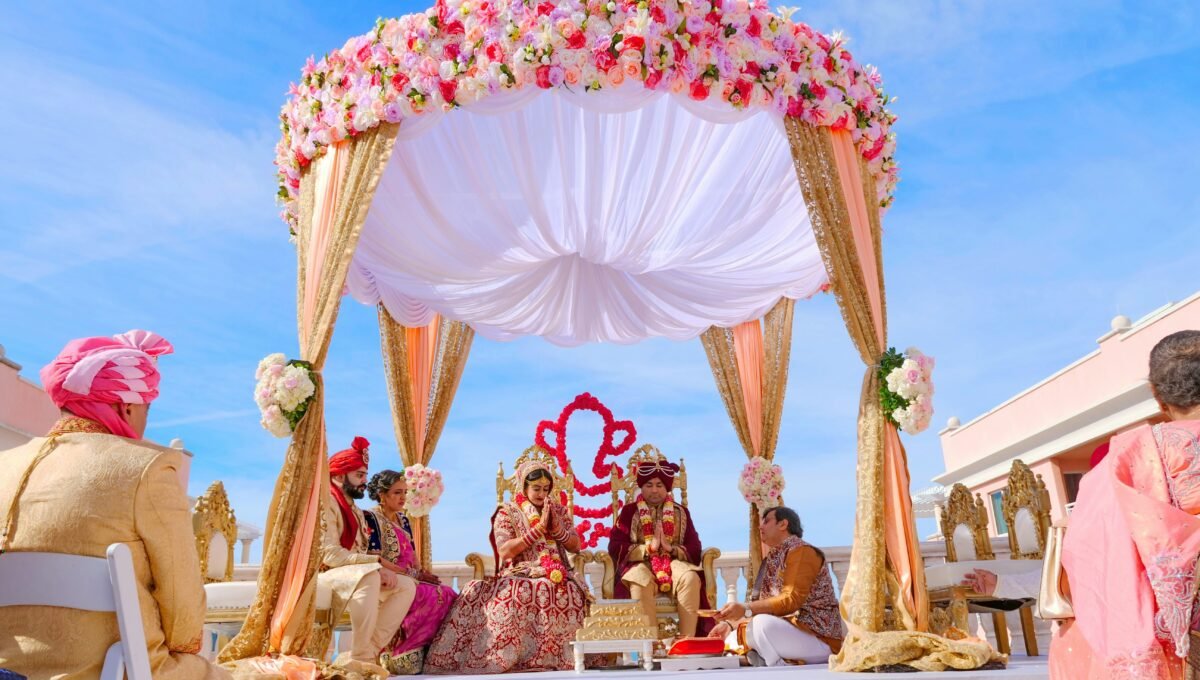
Planning a Big Fat Indian Wedding? Here is Why an Event Planner Makes All the Difference
There is a reason the phrase Big Fat Indian Wedding exists.
Indian weddings are not subtle. They are multi-day, multi-function, multi-family celebrations where the guest list alone can feel like its own project. And when you are an NRI couple planning all of this from the US, UK, or Canada, the scale can go from exciting to overwhelming very quickly.
A wedding event planner does not just make things easier. For a wedding of this size, they make the whole thing possible.
Why Indian Weddings Are a Different Beast Entirely
A typical Indian wedding is not one event. It is five or six events spread across two or three days, each with its own guest arrangements, vendors, decor, and energy.
Here is what that actually looks like:
● Mehendi: Artist, seating layout, music, food, and a relaxed atmosphere that sets the tone for everything that follows.
● Haldi: Intimate, personal, and timed carefully around the rest of the day.
● Sangeet: Performances, sound, lighting, dinner flow, and enough energy to keep the evening alive from start to finish.
● Baraat: Band, transport, route through the venue, and family coordination that involves more moving parts than it looks.
● Pheras: Priest timing, mandap setup, photographer positioning, and families seated and ready before things begin.
● Reception: Guest flow, stage entries, food service, music transitions, and a timeline that keeps the evening on track without feeling rushed.
And in between all of that, you have family arriving from different cities and countries, outfit changes, and a hundred small decisions that somehow all land on the couple.
An event planner for wedding of this scale is not a nice to have. It is the thing that holds the entire structure together.
If you want a clear picture of how all these functions are typically sequenced, our guide to luxury wedding planning in India breaks the full timeline down from 12 months out to wedding week.
What Scale Actually Means in Practice
Scale in an Indian wedding is not just about guest numbers. It is about everything multiplying at once.
More guests means:
● More hotel rooms to block and coordinate
● More transport logistics to manage
● More dietary requirements for the caterer
More functions means:
● More vendor briefs to prepare and share
● More setup timelines running back to back
● More moments where things can run late or overlap
More family means:
● More opinions to navigate
● More people who need to know where to be and when
● More coordination between different family groups across different events
And all of this is happening simultaneously, not one after the other.
A wedding event planner has a system for managing this. They have coordinated enough large Indian weddings to know exactly where the pressure points are and how to get ahead of them before they become problems.
For couples still deciding on the destination, our guides to wedding locations in Mumbai, and destination weddings in Goa are worth reading before you commit to a city.
Where Things Go Wrong Without a Planner
It is rarely one big thing that derails a wedding. It is five small things happening at the same time.
Here is what that looks like in practice:
● The decorator arrives late for the sangeet setup
● The caterer’s headcount does not match the final RSVP
● The baraat runs 40 minutes over and pushes the pheras into the evening
● The photographer is in the wrong room when the bride does her entry
● A key family member did not get the updated schedule
None of these are disasters on their own. But when they happen together, and they do, without someone managing the whole picture, the couple ends up spending their own wedding day troubleshooting instead of celebrating.
An event planner for wedding of this kind is specifically there to absorb all of that. They are the person fielding the calls, making the decisions, and keeping everything on track while you are getting ready, taking photos, and actually being present in the moments that matter.
Our wedding day checklist for brides covers the day itself in detail, but the honest truth is that even the most thorough checklist needs a person behind it on the ground.
Why NRI Couples Need This More Than Anyone
Planning a big Indian wedding is hard enough when you live locally. When you are doing it from another country, the challenges multiply significantly.
As an NRI couple, here is what you genuinely cannot do from abroad:
● Visit venues in person to check how they actually feel
● Drop in on a vendor to review their work before the wedding
● Walk the venue the week before to make sure the decor setup is going to plan
● Be the one managing a day timeline while also getting ready and spending time with family
That is exactly what a wedding event planner makes possible. They are your eyes, ears, and decision maker on the ground so you never have to be.
According to Brides magazine, couples who work with a full service planner consistently report lower stress levels and a more enjoyable experience in the lead up to their wedding. For NRI couples managing planning across time zones, that is even more true.
How Turquoise Weddings Handles This
Big Indian weddings need a planner who has done this before, many times, and who genuinely understands what NRI couples are navigating.
At Turquoise Weddings, the whole approach is built around making a large, multi-day Indian wedding feel manageable from abroad. Here is what that looks like in practice:
● One point of contact from the first venue conversation to the final function
● Vendor coordination so every brief is confirmed and every timeline is shared
● On the ground presence to check venues, meet vendors, and manage setups in person
● Day of management so the couple never has to troubleshoot or chase anyone on their wedding day
As an experienced Indian wedding planner working with NRI couples across the US, UK, and Canada, Turquoise Weddings brings the local knowledge, vendor relationships, and on the ground presence that a wedding of this scale genuinely needs.
Final Thoughts
A wedding is one of the most joyful, chaotic, beautiful things a family can put together. And when it comes together well, it feels completely effortless for everyone in the room.
But that effortless feeling does not happen by accident. It happens because a wedding event planner spent weeks, sometimes months, making sure every vendor, every timeline, and every function was set up to succeed.
So if you are planning a Big Fat Indian Wedding and wondering whether you really need a planner, here is the honest answer: you do. And the earlier you bring one in, the better everything gets.
They manage every moving part across every function, mehendi, haldi, sangeet, baraat, pheras, and reception. That means coordinating all vendors, managing timelines, handling guest logistics, and making sure each function runs smoothly into the next without the couple having to chase anyone.
A venue coordinator manages the venue’s staff and spaces. That is it. A wedding event planner manages everyone else too, your photographer, decorator, caterer, mehendi artist, priest, and entertainment. For a multi-function Indian wedding, you need both, but the planner is the one holding everything together.
As early as possible, ideally 9 to 12 months out. The earlier a planner is involved, the more they can help shape the big decisions rather than just managing the ones already made. Peak season venues and vendors book up fast, and a planner with existing relationships gets you ahead of that.
Yes, and this is where they earn their place. Large guest lists mean more hotel rooms, more transport, more catering coordination, and more people who need to know where to be at all times. A good event planner for wedding of that scale has systems specifically built for this.
Usually a combination of small things at once. The baraat running late and pushing the pheras back. The caterer’s headcount being off. A vendor arriving at the wrong time. The photographer missing a key moment because nobody briefed them on the schedule. None of these are disasters alone, but together they add up.
Absolutely. NRI couples cannot visit venues, check on vendors, or walk the setup in the week before the wedding. A planner is their presence on the ground in India, handling everything that physically needs to be there to manage. Without that, you are coordinating a large Indian wedding entirely over calls and messages from a different time zone.
Usually five to six across two to three days. Mehendi, haldi, sangeet, baraat, pheras, and reception. Each one has its own vendors, setup, guest arrangements, and timing requirements, and the planner manages all of them as a connected whole rather than as separate events.
One dedicated point of contact manages everything end to end, from the first venue conversation to the final function on the wedding day. Vendors are briefed, timelines are confirmed, setups are checked on the ground, and the couple never has to troubleshoot or chase anyone. The goal is simple: you show up and celebrate, and the team handles the rest.
Plan Your Dream Wedding
Let us bring your vision to life with bespoke planning, timeless elegance, and attention to every detail.
Get in Touch